
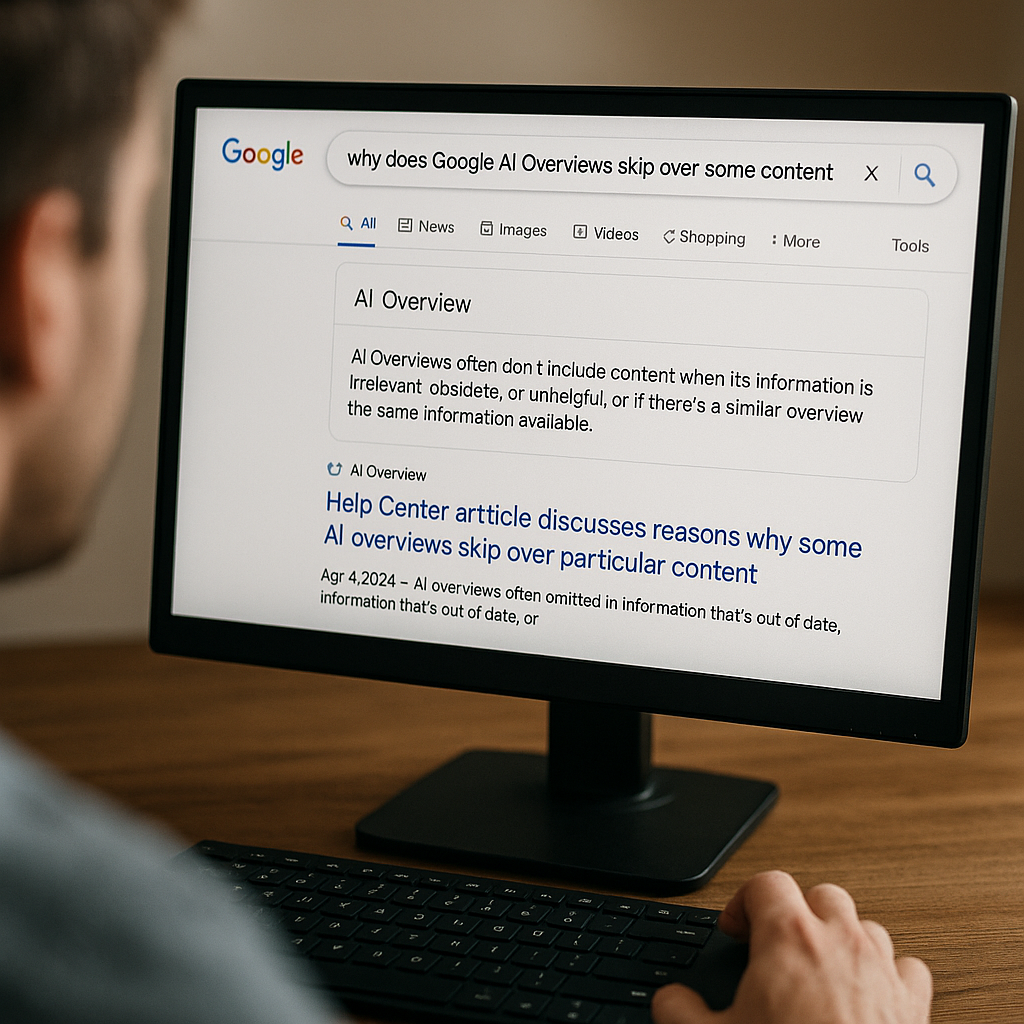
Why Google AI Overviews Skip Your Content is not just an SEO problem, it is often a trust problem. If you publish health content on nutrition, symptoms, supplements, medications, chronic disease, or wellness, this guide shows why Google may ignore your page and what to fix so your content becomes clearer, safer, and more citation-worthy.
Why Google AI Overviews Skip Your Content in Health Search Results
Google AI Overviews may skip your content when it lacks clear medical accuracy, original value, trusted sourcing, or safe health guidance. For YMYL topics, Google tends to favor pages that show expert review, cite reliable evidence, answer the query directly, and avoid exaggerated claims about diagnosis, treatment, supplements, or disease prevention.
Health searches carry higher risk than everyday searches. Someone looking up chest pain, blood sugar symptoms, vitamin D deficiency, gut microbiome changes, or hypertension may make decisions that affect their body, medications, or medical care. Therefore, Google applies stronger quality expectations before using a page in AI-generated search summaries.
In many cases, the issue is not that your article is badly written. Instead, it may be too vague, too promotional, poorly structured, or missing the kind of clinical context that helps Google understand whether it is safe to surface. According to research on search quality systems and medical information standards, trustworthy health content usually answers the question, explains uncertainty, and encourages appropriate care when symptoms or risks are serious.
How Google Decides Which Health Pages Deserve AI Overview Citations
Google does not choose pages only because they contain the right keyword. It evaluates whether the page helps the searcher quickly and safely. For health content, that means clarity, evidence, author credibility, and balanced advice matter more than clever wording.
Pages are more likely to be considered useful when they include:
- Clear answers to symptom, treatment, nutrition, or prevention questions.
- Medical consensus from trusted sources such as national health organizations, peer-reviewed studies, or clinical guidelines.
- Named expert review when discussing conditions such as diabetes, heart disease, pregnancy, kidney disease, or autoimmune disorders.
- Practical next steps, including when to seek urgent or routine medical advice.
- Why Google AI Overviews Skip Your Content: the page may not prove enough experience, accuracy, or safety for a health-related query.
For example, an article on magnesium and sleep may rank poorly in AI summaries if it claims the mineral “cures insomnia.” However, a stronger article explains that magnesium may support normal muscle and nervous system function, that studies suggest mixed sleep results, and that people with kidney disease or medication concerns should consult a healthcare provider.
Similarly, a page about inflammation should not simply list anti-inflammatory foods. It should explain the immune system, chronic inflammation, cardiovascular risk, metabolic health, and the limits of diet alone. In addition, it should avoid implying that food replaces medical treatment for rheumatoid arthritis, inflammatory bowel disease, or other diagnosed conditions.
Why Google AI Overviews Skip Your Content When the Medical Intent Is Unclear
One common reason Why Google AI Overviews Skip Your Content is mixed intent. A page may start as a symptom guide, turn into a supplement review, and end with a product pitch. As a result, Google may struggle to decide whether the page is informational, commercial, or medically advisory.
Health intent needs clean separation. If the query is “What causes tingling in hands?” the reader needs causes, warning signs, and when to seek care. They do not need an immediate sales recommendation for a nerve health supplement. Conversely, if the query is “best foods for blood pressure,” the article should discuss sodium, potassium-rich foods, the DASH eating pattern, and medication considerations without promising a cure.
To improve clarity, match each page to one dominant intent. Then add supporting sections that answer related People Also Ask style questions, such as “Can AI Overviews use my health article as a source?”, “Why is my medical content not showing in Google AI results?”, and “How do I make health content more trustworthy for Google?”
Content Signals That May Help Your Health Article Get Chosen
AI Overview visibility is not guaranteed. However, certain content signals can support stronger indexing, better rankings, and more trust. These signals also improve the reader experience, which matters because users leave quickly when health answers feel thin or unsafe.
Start with the answer. Then give context. For example, if you write about probiotics, begin with what probiotics may do, who might benefit, and what the evidence does not yet prove. After that, explain the gut microbiome, digestive symptoms, immune system links, and possible side effects such as bloating or interactions in immunocompromised patients.
Use this practical structure for health pages:
- Answer the main query in 40 to 60 words near the top.
- Define the condition, nutrient, treatment, or body system in plain language.
- Explain what studies suggest, and note where evidence is limited.
- List red flags, contraindications, or groups who need medical advice.
- Add expert review, update dates, and transparent sourcing.
- Use schema, descriptive headings, and concise summaries to help Google parse the page.
Notably, Google often rewards content that shows first-hand editorial judgment. If every paragraph sounds like a generic rewording of top-ranking pages, the article adds little. Instead, include useful comparisons, patient-centered explanations, clinical nuance, and examples that a real reader can act on safely.
Health Content Mistakes That Can Reduce AI Overview Visibility
Why Google AI Overviews Skip Your Content often comes down to preventable quality gaps. In health publishing, small errors can reduce trust quickly. A vague claim about “balancing hormones,” for example, may raise more concern than confidence unless you explain which hormones, which symptoms, and what medical evaluation may be needed.
Common problems include:
- Overpromising results, such as saying a supplement prevents cancer or reverses diabetes.
- Missing safety context for pregnancy, children, older adults, liver disease, kidney disease, or medication use.
- Using weak sources, outdated studies, or no citations for medical claims.
- Publishing anonymous health advice without reviewer qualifications.
- Writing broad content that fails to answer the exact question searched.
- Ignoring urgent symptoms such as severe chest pain, stroke signs, breathing trouble, or sudden confusion.
Experts recommend using measured language in health content. Phrases such as “may help,” “is associated with,” “studies suggest,” and “can support” are usually safer than absolute claims. Moreover, readers should understand that online information cannot diagnose them. If symptoms are persistent, severe, worsening, or unusual, they should consult a healthcare provider.
Practical Fixes Before You Ask Why Google AI Overviews Skip Your Content
Before changing titles or adding more keywords, audit the health value of the page. Keyword placement helps, but Google’s systems also evaluate usefulness, trust, originality, and risk. Therefore, improving the substance of the article usually works better than cosmetic SEO edits.
- Rewrite the first 100 words so the answer is immediate and specific.
- Add expert-reviewed safety notes for medications, supplements, pregnancy, chronic illness, and high-risk symptoms.
- Replace vague claims with evidence-based wording and cite reputable medical sources.
- Use specific headings that match real search questions.
- Add examples that explain how the advice applies to nutrition, symptoms, prevention, or care decisions.
- Remove sales-heavy sections from informational medical articles.
In addition, make your article easy to crawl. Use descriptive title tags, clean internal links, fast loading, and structured data where appropriate. However, schema alone will not make unsafe content trustworthy. It only helps search engines interpret information that already deserves to be understood.
Can Schema, Citations, and Expert Review Help AI Overview Inclusion?
Yes, they may help, but they are not magic buttons. MedicalWebPage schema, FAQ schema, author profiles, editorial policies, and visible review credentials can support trust. Likewise, citations from organizations such as the CDC, NIH, WHO, Mayo Clinic, or specialty societies can strengthen claims when used accurately.
Still, those signals need to match the article itself. If a page cites strong research but then stretches the findings into a miracle claim, trust drops. For example, studies may suggest that omega-3 fatty acids support cardiovascular health in some contexts. That does not mean an article should tell readers to stop prescribed lipid medication or treat heart disease with supplements alone.
Consequently, the best approach is a layered one. Combine technical SEO with medical accuracy, clear intent, useful formatting, and transparent editorial standards. This gives both readers and search systems more reasons to trust the page.
What to Do If Your Health Content Is Indexed but Still Ignored
If your page is indexed but not appearing in AI summaries, compare it against the pages that are cited. Look for practical depth, not just domain authority. Do they answer faster? Do they include risks you missed? Do they explain the topic with better medical precision?
Also check whether your content adds anything new. For a topic like vitamin D deficiency, a strong page might explain symptoms, testing, bone health, immune function, food sources, sun exposure, and why supplementation should be discussed with a clinician in certain cases. A weaker page may only repeat “vitamin D boosts immunity” without context.
Finally, update stale health content regularly. Medical guidance changes, and old statements can become misleading. Review dates, corrected facts, and current evidence show care. As a result, your content may earn stronger trust over time.
The practical takeaway is simple: Why Google AI Overviews Skip Your Content usually reflects a gap in trust, clarity, evidence, or safety, especially in health topics. Write for the person making a real health decision, support claims carefully, include risks, and make the answer easy for both readers and Google to understand.