
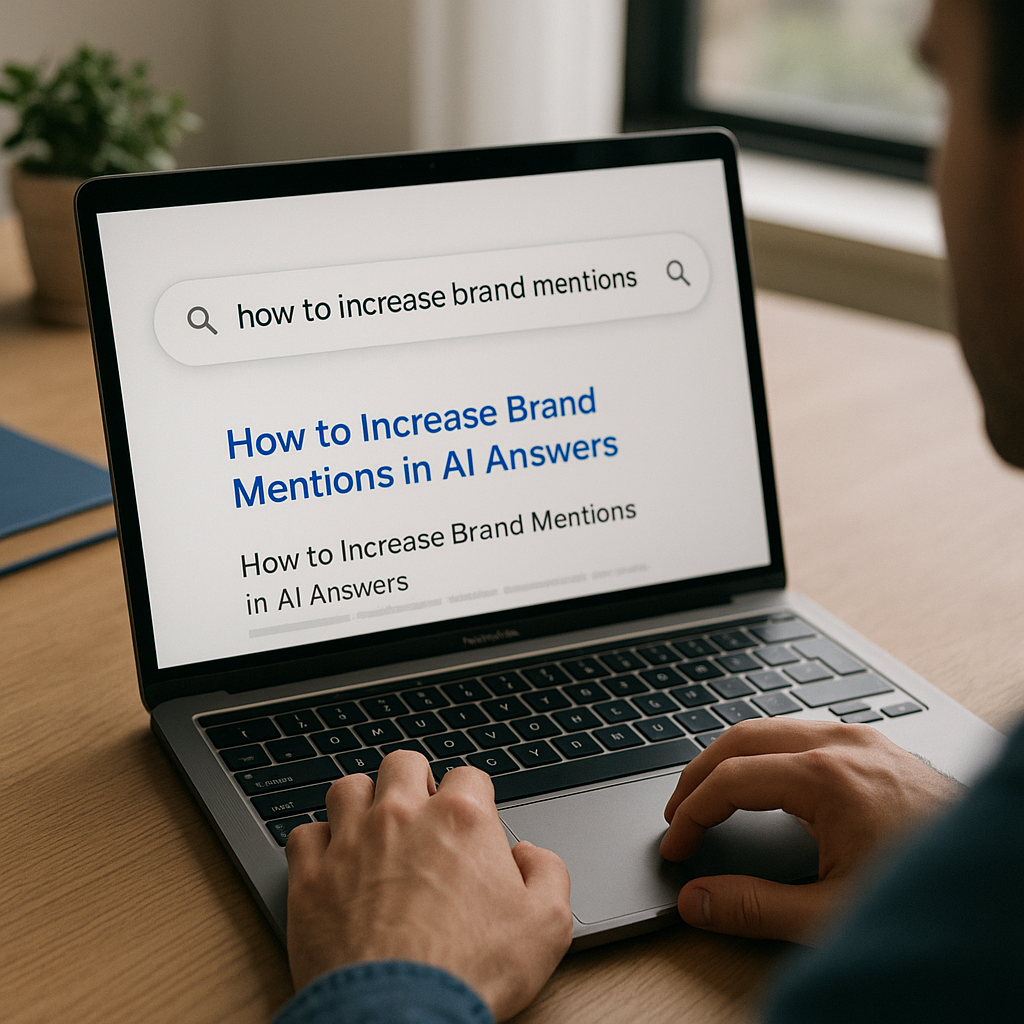
How To Increase Brand Mentions In AI Answers matters for health clinics, supplement companies, telehealth platforms, and wellness brands because AI search is becoming a front door to patient decisions. This guide shows how to earn safer, more credible AI visibility without exaggerating medical claims or risking trust.
How To Increase Brand Mentions In AI Answers for Health and Wellness Searches
To increase brand mentions in AI answers, build a clear entity around your health brand, publish medically accurate content, earn trusted third-party references, use structured data, and keep claims evidence-based. AI systems tend to cite brands that appear consistently across authoritative sources, especially for YMYL topics like symptoms, chronic disease, nutrition, and treatment options.
AI answers do not mention brands randomly. Instead, large language models and search-based AI systems look for patterns across the open web. Therefore, if your clinic, health product, or medical service appears in credible contexts, AI tools may understand that your brand is relevant to specific health topics.
For example, a dermatology clinic that publishes reviewed content on acne, eczema, retinoids, and skin barrier health gives search systems a clear topical map. Similarly, a nutrition brand that explains blood glucose, fiber, gut microbiome, and cardiovascular health with careful sourcing becomes easier to classify.
However, health content has a higher bar. Google and AI search systems treat medical information as YMYL content because it can affect real decisions. As a result, vague claims, thin blog posts, copied advice, or unsupported supplement promises can reduce visibility and trust.
Why Do AI Tools Mention Some Health Brands More Than Others?
AI tools often mention health brands that have strong topical authority, reliable citations, consistent naming, and positive contextual signals. In addition, they favor brands connected to expert-reviewed content, reputable publications, medical directories, clinical guidelines, and trustworthy local or industry profiles.
According to research on information retrieval and entity recognition, search systems need repeated, consistent signals to connect a brand with a topic. Therefore, your brand should not only exist on your own website. It should also appear in places that confirm your expertise.
- How To Increase Brand Mentions In AI Answers: publish original health content that answers real patient questions with medically cautious language.
- Build author pages for physicians, dietitians, pharmacists, therapists, or certified health professionals involved in your content.
- Earn mentions from relevant sources, such as medical associations, local health directories, podcasts, journals, or trusted wellness publishers.
- Use consistent brand names, service descriptions, addresses, credentials, and medical specialties across the web.
- Add structured data for organization, medical business, physician, article, FAQ, and review content where appropriate.
Notably, AI citation behavior can change as models update. Still, the foundations remain steady. Clear expertise, external validation, and accurate health information help search engines and AI tools understand why your brand deserves inclusion.
How To Increase Brand Mentions In AI Answers with Health Content Clusters
Content clusters help AI systems connect your brand to a specific healthcare niche. Instead of publishing random posts, create a focused library around conditions, symptoms, treatments, prevention, lifestyle support, and safety concerns.
For instance, a physical therapy clinic should not only write one article about back pain. It can create a cluster covering sciatica, posture, core strength, mobility, pain red flags, recovery timelines, and when to consult a healthcare provider. Consequently, the brand becomes easier to associate with musculoskeletal care.
Similarly, a women’s health platform may build clusters around menstrual health, polycystic ovary syndrome, perimenopause, iron deficiency, fertility testing, and mental health. However, every article should avoid overpromising. Studies suggest that clear risk communication improves trust, especially when readers compare online information with clinical care.
What Content Signals Help Health Brands Appear in AI Responses?
The strongest content signals combine expertise, specificity, freshness, and safety. AI systems need to understand who created the content, why it is reliable, and which health questions it answers better than generic pages.
Start by matching content to real search behavior. People often ask, “How does AI choose which brands to recommend?” or “Can schema markup help my brand appear in AI answers?” They also ask, “How do I get my clinic mentioned in ChatGPT or Google AI results?” Your content should answer these questions directly.
In addition, use medical context where it genuinely helps. If your brand works in cardiology, discuss blood pressure, cholesterol, medication adherence, lifestyle changes, and warning symptoms with care. If you work in nutrition, explain macronutrients, micronutrients, digestion, allergies, and medication interactions without making treatment claims.
Experts recommend several trust-building elements for health pages:
- Medical reviewer names, credentials, and professional profiles.
- Publication dates and meaningful update dates.
- References to reputable sources, such as public health agencies, medical societies, and peer-reviewed research.
- Balanced language about possible risks, contraindications, and limitations.
- Clear guidance to consult a healthcare provider for diagnosis, treatment, or medication decisions.
Moreover, answer pages should include concise explanations, not just sales copy. AI systems may ignore content that exists only to promote a product. Therefore, your brand should become a helpful source first and a commercial option second.
What Risks Should Health Brands Avoid When Optimizing for AI Mentions?
Health brands should avoid manipulating AI visibility with misleading claims, fake reviews, fabricated credentials, or unsupported medical promises. These tactics may create short-term exposure, but they can damage rankings, patient trust, and regulatory safety.
This matters especially for supplements, diagnostics, mental health services, weight loss programs, hormone clinics, and chronic disease support. For example, saying a supplement “cures diabetes” or a device “prevents heart disease” can create legal and medical risk. Instead, use measured language such as “may support,” “is associated with,” or “can help as part of clinician-guided care,” when accurate.
In addition, never imply that content replaces medical care. Readers with chest pain, severe allergic reactions, suicidal thoughts, stroke symptoms, or uncontrolled blood glucose need urgent professional help, not a branded AI answer. Consequently, safety language can improve trust rather than weaken conversions.
AI visibility should also respect privacy. Do not publish patient stories, before-and-after photos, or testimonials without proper consent. Also, avoid exposing protected health information. For healthcare organizations, privacy and compliance signals support long-term authority.
7 Practical Steps to Earn Safer AI Visibility for a Medical Brand
- Define your primary health entity, including brand name, specialty, location, credentials, and patient audience.
- Create expert-reviewed content clusters around your core topics, such as diabetes care, fertility, dermatology, mental health, or sports injury recovery.
- Add schema markup to articles, FAQs, provider pages, services, reviews, and organization information.
- Earn credible mentions from universities, medical directories, professional associations, local news, podcasts, and reputable health publications.
- Refresh key pages every 6 to 12 months, especially when guidelines, research, or product safety information changes.
- Monitor AI answers in Google AI Overviews, Perplexity, ChatGPT browsing results, Bing Copilot, and other tools for brand accuracy.
- Correct misinformation by updating your site, strengthening third-party profiles, and publishing clear evidence-based explanations.
As a result, your brand becomes easier for AI systems to verify. This does not guarantee inclusion, but it improves the signals that AI answer engines commonly rely on.
Can Reviews, PR, and Local SEO Improve AI Brand Mentions?
Yes, reviews, public relations, and local SEO can support AI brand visibility when they reinforce real-world credibility. For healthcare brands, local signals are especially important because patients often search for nearby doctors, dentists, therapists, urgent care centers, dietitians, and pharmacies.
Keep your Google Business Profile complete and accurate. In addition, make sure your name, address, phone number, services, and medical categories match across directories. Inconsistent profiles can confuse search systems and weaken entity confidence.
PR also helps when it adds expertise rather than noise. For example, a pediatrician quoted in a local article about flu season, asthma triggers, or school nutrition earns topical relevance. Similarly, a pharmacist discussing medication safety or contraindications may strengthen authority around patient education.
However, do not buy fake mentions or mass-produced placements. AI systems increasingly evaluate quality, not just quantity. A thoughtful quote in a trusted health publication can matter more than dozens of low-value backlinks.
How Should You Measure AI Answer Visibility?
Measure AI visibility by tracking when, where, and how your brand appears in AI-generated answers. In addition, review whether the mention is accurate, favorable, cited, and connected to the right health topic.
Useful metrics include branded search growth, referral traffic from AI platforms, impressions for medical content clusters, citation frequency, local profile actions, and conversions from educational pages. Moreover, track unbranded prompts. For example, test questions such as “best online therapy platform for anxiety support” or “trusted physical therapy clinic for knee pain near me.”
Because AI answers vary by location, user history, and platform, review patterns rather than single results. If your brand rarely appears, strengthen your topical content and external authority. If it appears with inaccurate information, update your entity signals quickly.
Ultimately, How To Increase Brand Mentions In AI Answers is not about tricking algorithms. It is about making your health brand easier to understand, verify, and trust. Build expert content, earn credible references, protect patient safety, and keep your medical claims balanced. That approach gives both readers and AI systems stronger reasons to mention your brand.