
How To Track Traffic From AI Search is becoming essential for health publishers, clinics, wellness brands, and medical content teams because AI answers are now shaping how patients find information. If your article on diabetes symptoms, hypertension, medication side effects, or digestive health is being cited by ChatGPT, Google AI Overviews, Perplexity, or Copilot, you need a practical way to measure that visibility, protect trust, and improve content performance.
How To Track Traffic From AI Search Without Guessing
To track AI search traffic, combine referral data, server logs, rank monitoring, brand mention tracking, and landing page behavior analysis. AI tools often hide or blend referral sources, so the most reliable approach is to look for patterns across analytics platforms, citation appearances, query growth, and high-intent pages.
AI search traffic is different from traditional organic search. A user may read an AI-generated answer, see your health article cited, and then click through. However, another user may search your clinic name later after seeing it in an AI answer. As a result, AI search influence can appear as direct traffic, branded search, referral traffic, or even assisted conversions.
For health websites, this matters because patient trust is fragile. If an AI platform summarizes your content about cardiovascular disease, anxiety symptoms, prenatal nutrition, or medication interactions, your analytics should show whether that exposure brings qualified visitors, appointment requests, newsletter signups, or content engagement.
According to research on search behavior, users increasingly expect fast, summarized answers before clicking. Therefore, health brands should measure both clicks and visibility. A page may lose some traditional traffic but still gain authority if AI systems cite it consistently.
Which AI Search Sources Should Health Websites Monitor?
Most health content teams should monitor AI Overviews, ChatGPT browsing referrals, Perplexity, Copilot, Gemini, and emerging answer engines. In addition, they should watch for unusual increases in direct traffic, branded queries, and visits to medically sensitive pages.
Common AI search traffic signals include:
- Referral traffic from domains such as perplexity.ai, copilot.microsoft.com, chat.openai.com, or gemini.google.com.
- New branded searches after your content appears in an AI summary.
- Landing page spikes on patient education content, symptom guides, or condition pages.
- Higher engagement on pages with strong medical review, citations, and clear authorship.
- Increases in appointment bookings or contact form submissions after AI citation visibility.
- How To Track Traffic From AI Search should include both analytics data and off-site AI citation monitoring.
However, not every AI visit will show a clean referral. Some browsers, apps, and privacy settings strip referral information. Meanwhile, AI tools may summarize your page without sending a click. This is why a single analytics report rarely tells the full story.
For example, if your article on early diabetes symptoms appears in an AI answer, users may later search your organization by name. Similarly, a medication safety guide may lead someone to call a clinic rather than click a link. Therefore, tracking should include both measurable traffic and surrounding search signals.
How To Track Traffic From AI Search in Google Analytics 4
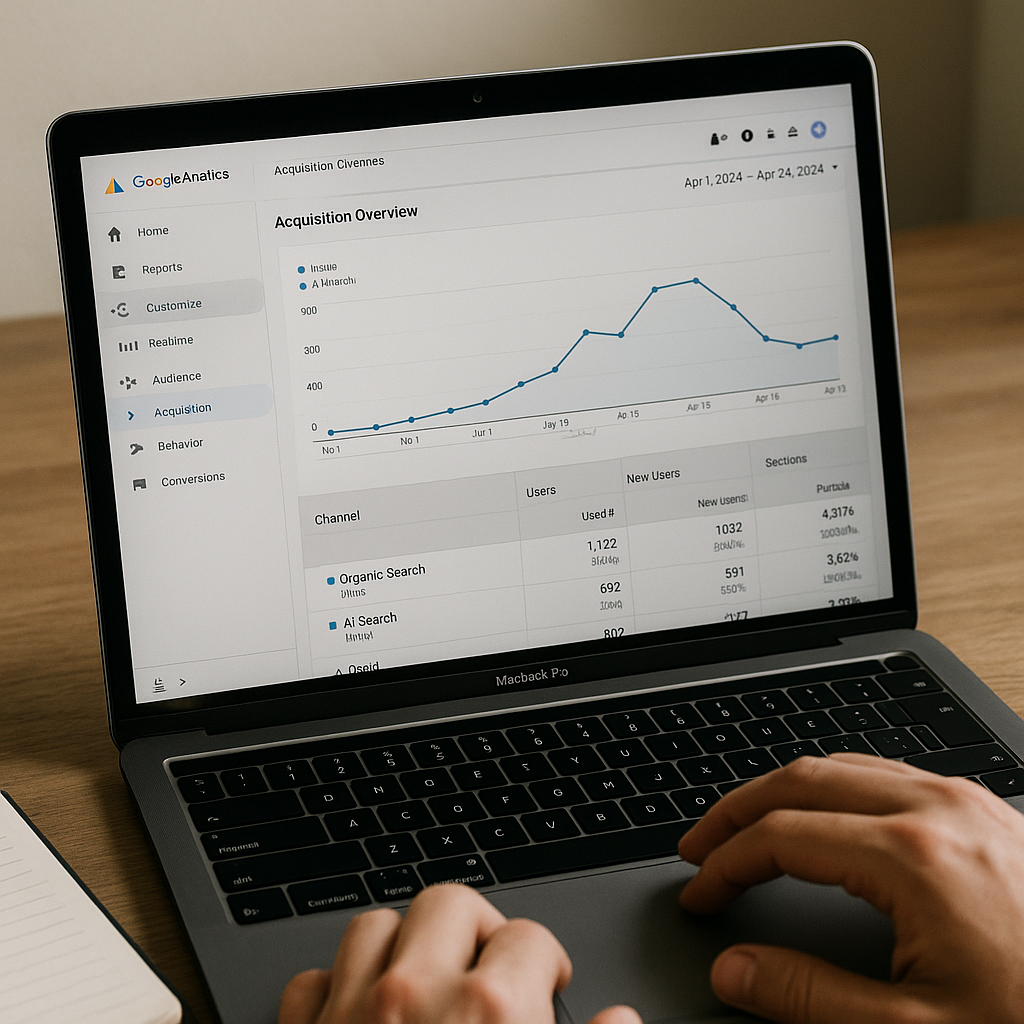
Google Analytics 4 is usually the first place to check. It will not identify every AI-driven visitor, but it can reveal referral sources, landing page shifts, engagement quality, and conversion patterns.
Start by creating a custom exploration for AI referral domains. Then compare those sessions with organic search, direct traffic, and referral traffic from medical directories or health publications. In addition, review engaged sessions, scroll depth, appointment clicks, and newsletter signups.
Use this workflow:
- Open GA4 and go to Reports, then Acquisition, then Traffic acquisition.
- Change the primary dimension to Session source or Session source and medium.
- Search for AI-related sources such as Perplexity, ChatGPT, Copilot, Gemini, or other answer engines.
- Create a comparison for those sources and review landing pages.
- Check engagement rate, average engagement time, conversions, and returning users.
- Save the report and review it weekly, especially after publishing new medical content.
This method helps you see whether AI search brings visitors who actually read. For YMYL health content, engagement quality matters more than raw traffic. A small number of visitors reading a cancer screening article carefully may be more valuable than thousands of low-intent visits.
Why AI Search Tracking Matters More for Health Content
Health content sits in a higher-trust category because inaccurate advice can affect real decisions. Therefore, AI search visibility should never be treated as a vanity metric only. It should be connected to accuracy, medical review, patient safety, and user intent.
Studies suggest that users may place high trust in answers that appear polished, even when they lack context. Consequently, health publishers should make their source content clear, balanced, and medically responsible. AI systems are more likely to reuse pages that have structured information, expert review, transparent sourcing, and helpful explanations.
Strong health pages often include:
- Clear explanations of symptoms, causes, diagnosis, and treatment options.
- Medical reviewer names, credentials, and update dates.
- Balanced language about risks, side effects, and when to seek care.
- References to accepted clinical guidance, not unsupported claims.
- Practical next steps, including when to consult a healthcare provider.
For example, an article about magnesium and sleep should explain possible benefits, but it should also mention medication interactions and kidney disease concerns. Similarly, content about chest pain should never encourage self-diagnosis. It should guide readers to urgent medical care when symptoms may suggest a heart attack.
This is where How To Track Traffic From AI Search becomes a quality strategy, not just an analytics task. If AI tools cite a page, review that page for medical accuracy, clarity, and safety. Moreover, make sure it does not overpromise outcomes or replace professional care.
What Metrics Show AI Search Is Sending Valuable Visitors?
Traffic volume alone can mislead you. Instead, measure whether users behave like people who found a useful answer and want more detail. For health sites, this often means longer reading time, deeper visits, and careful interaction with medically reviewed content.
Useful AI search metrics include:
- AI referral sessions by source and landing page.
- Engagement rate for symptom, condition, and treatment pages.
- Conversions such as appointment clicks, provider profile views, or portal signups.
- Branded search growth after AI citation appearances.
- Returning visitors from sensitive topics such as fertility, mental health, or chronic pain.
In addition, compare AI traffic to traditional organic search. If AI visitors spend more time on a page about blood pressure management, they may be highly qualified. However, if they bounce quickly from a supplement article, the AI summary may have created the wrong expectation.
Experts recommend reviewing landing page content when engagement drops. Sometimes the page title promises one thing, while the article answers another. In health content, this can weaken trust quickly. Therefore, align headings, summaries, and calls to action with the exact medical question users are asking.
What Are the Risks of Tracking AI Search Traffic in Healthcare?
The biggest risks are over-attribution, privacy mistakes, and unsafe content decisions. AI search tracking can support smarter publishing, but it should not push health brands toward sensational topics, exaggerated claims, or aggressive retargeting of vulnerable users.
Be careful with medically sensitive behavior data. Pages about mental health, pregnancy, sexual health, substance use, cancer, or chronic disease can reveal private concerns. Therefore, avoid using analytics in a way that identifies or exploits individuals. Follow applicable privacy laws, internal compliance policies, and, where relevant, HIPAA-related guidance.
In addition, do not assume that every direct visit came from an AI answer. Direct traffic can come from bookmarks, messaging apps, email clients, or privacy tools. Similarly, a sudden rise in branded search may come from offline media, social sharing, or physician referrals.
There is also an editorial risk. If a page gets AI citation visibility, you may feel tempted to broaden claims. However, health content should remain measured. Use phrases such as “may help,” “is often associated with,” and “can support” when evidence is not definitive. Also, encourage readers to consult a healthcare provider for personal medical decisions.
How Can You Improve AI Search Visibility Safely?
Improving AI visibility starts with genuinely useful content. Answer the patient’s real question, then support the answer with context, limits, and next steps. In addition, make your expertise easy for both humans and machines to understand.
- Add a concise answer near the top of each health article.
- Use specific headings that match patient questions, such as “Can dehydration cause headaches?”
- Include medical review details, author credentials, and update dates.
- Define clinical terms such as inflammation, insulin resistance, or immune response in plain language.
- Use structured data where appropriate, including article, FAQ, and medical schema.
- Review top AI-cited pages every month for accuracy and safety.
Moreover, build topic clusters around related patient needs. For example, a hypertension hub can link to blood pressure ranges, lifestyle factors, medication side effects, sodium intake, and when to seek urgent care. This helps search systems understand depth. It also helps readers move from a quick answer to safer, more complete education.
How To Track Traffic From AI Search works best when analytics, content quality, and medical responsibility move together. Track referrals, citations, branded demand, and engagement, but also keep every health page accurate, cautious, and useful. As AI search grows, the sites that win will be the ones that measure visibility while protecting patient trust.