
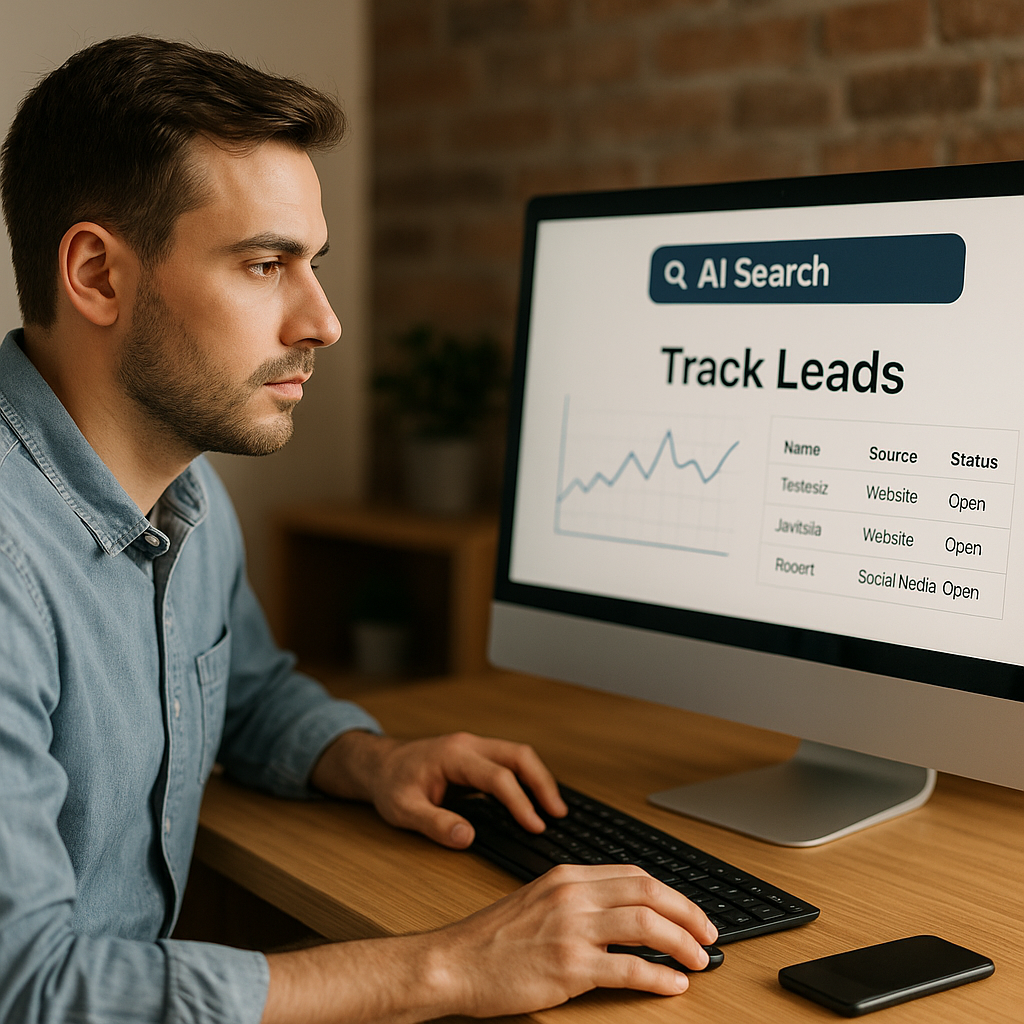
How To Track Leads From AI Search in 2026 matters because patients are no longer finding healthcare providers only through blue links. This guide shows clinics, hospitals, telehealth brands, dental practices, and wellness providers how to connect AI-driven discovery to real patient inquiries without compromising privacy, trust, or compliance.
How To Track Leads From AI Search When AI Tools Hide Referrer Data
To track leads from AI search, combine source-aware landing pages, first-party analytics, call tracking, CRM fields, UTM links, patient intake questions, and AI visibility monitoring. Because ChatGPT, Gemini, Perplexity, and AI Overviews may not always pass referral data, you need multiple evidence points rather than one tracking method.
AI search is changing healthcare marketing because patients often ask full questions before they visit a website. For example, someone may ask, “Which dermatologist treats adult acne near me?” or “What are the safest options for chronic knee pain?” If your practice appears in that AI-generated answer, the patient may call directly, search your brand name later, or click a cited page.
That creates a tracking gap. Traditional SEO analytics may show the final visit as direct, organic, or branded search. However, the first influence may have come from an AI answer. Therefore, healthcare marketers need attribution models that respect patient privacy while capturing the path from AI discovery to appointment request.
According to research on digital patient behavior, people often check several sources before choosing care. They may compare provider reviews, medical credentials, accepted insurance, and treatment explanations. As a result, tracking AI-generated leads requires both technical setup and thoughtful patient journey analysis.
What Counts as an AI Search Lead in Healthcare?
An AI search lead is a patient, caregiver, or referring party who discovers your healthcare organization through an AI answer, chatbot, AI search engine, or generative search summary, then takes a measurable action. That action may be a phone call, form submission, portal request, live chat, booking click, or insurance verification.
In healthcare, these leads may come from many intent levels. Some are urgent, such as “same-day pediatric clinic near me.” Others are educational, such as “what causes numbness in hands?” Notably, both matter. A person researching symptoms today may become a patient later, especially in specialties like cardiology, orthopedics, behavioral health, dermatology, or women’s health.
Common AI search lead signals include:
- Sudden increases in branded searches after AI visibility improves
- Direct traffic to service pages mentioned in AI-generated answers
- Calls from patients who say they found you through ChatGPT, Gemini, or Perplexity
- Appointment requests from pages optimized for conversational medical questions
- How To Track Leads From AI Search appearing as a defined field in your CRM or intake workflow
Meanwhile, you should avoid collecting unnecessary protected health information, also called PHI, inside marketing tools. For example, a general appointment request can be tracked safely, but symptom details, diagnosis information, prescription names, and insurance identifiers require stronger safeguards. When in doubt, consult a healthcare compliance professional.
How To Track Leads From AI Search Using First-Party Data
The most reliable way to track AI-influenced healthcare leads is to strengthen first-party data. In simple terms, first-party data is information your organization collects directly through your website, phone system, CRM, scheduling platform, or patient intake process.
Start with landing pages that answer specific patient questions. For example, a spine clinic might build pages around “non-surgical treatment for sciatica,” while a primary care practice might answer “when should adults get blood pressure checked?” These pages can appear in AI answers because they provide clear, medically reviewed information.
Then connect each page to measurable actions. Use appointment buttons, click-to-call links, chat prompts, and request forms. In addition, create CRM fields such as “How did you hear about us?” with options for AI search, ChatGPT, Google AI Overview, Perplexity, Gemini, You.com, and “not sure.”
Experts recommend asking source questions in plain language. Instead of asking, “Which acquisition channel converted you?” ask, “Did you first hear about us from Google, an AI tool like ChatGPT, a friend, insurance directory, or another source?” This feels natural and often improves response accuracy.
How Does AI Search Lead Tracking Work in 2026?
AI search lead tracking works by combining technical attribution with patient-reported attribution. Since AI platforms may not always send a clean referrer, you need a layered approach. Moreover, each layer should support HIPAA-aware, privacy-first marketing operations.
Use these methods together:
- Create dedicated AI-aware landing pages for high-intent service topics, such as urgent care, physical therapy, fertility care, sleep apnea, or anxiety treatment.
- Add UTM-tagged links to owned profiles, physician bios, Google Business Profile links, and directory citations where appropriate.
- Use compliant call tracking that avoids recording sensitive clinical details unless your legal and compliance team approves it.
- Add “AI search” and specific AI platform options to CRM, intake, and call center source fields.
- Monitor brand mentions and cited pages in AI tools by testing patient-style queries every month.
- Compare changes in AI visibility with branded search, direct traffic, calls, and booked appointments.
This approach matters because one report rarely tells the full story. For example, Google Analytics may show a patient as direct traffic. However, the patient may have first seen your clinic cited in an AI answer about migraine treatment. Similarly, a caregiver may ask Perplexity for “best memory care evaluation near me,” then search your brand later.
Studies suggest that repeated exposure increases trust. Therefore, you should track assisted influence, not only last-click conversion. For healthcare, this is especially important because patients often take time to evaluate symptoms, treatment options, costs, risks, and provider credentials.
Which Metrics Show That AI Search Is Driving Patient Leads?
The best AI search metrics connect visibility to patient actions. Vanity metrics alone, such as impressions or mentions, are not enough. Instead, focus on signals that show AI discovery is moving people closer to care.
Track these practical metrics:
- AI citation frequency for your service pages, physician profiles, and educational guides
- Branded search growth after AI answer visibility improves
- Direct traffic increases to pages that AI tools commonly cite
- Call volume by service line, location, and appointment type
- Form submissions, booking clicks, and completed consultation requests
- Patient-reported source data from intake forms and call scripts
In addition, look for service-line patterns. If AI tools cite your content about atrial fibrillation, pelvic floor therapy, diabetes nutrition, or ADHD evaluations, then compare that visibility with related appointment demand. However, avoid assuming causation too quickly. Seasonality, paid ads, local reputation, insurance changes, and physician availability can also affect lead volume.
Can Google Analytics track AI search traffic? Sometimes, but not always. Some AI platforms send referral data, while others appear as direct traffic or blended organic sessions. Consequently, analytics should be treated as one clue, not the full answer.
What Privacy Risks Should Healthcare Marketers Avoid?
Healthcare lead tracking can support growth, but it also carries privacy responsibilities. Because medical searches often involve sensitive concerns, organizations must be careful about what they collect, where they store it, and which vendors can access it.
Common risks include sending PHI to non-compliant analytics tools, recording appointment calls without proper consent, storing symptom details in ad platforms, or combining clinical data with marketing profiles. These practices may create legal, ethical, and reputational problems.
Experts recommend separating marketing analytics from clinical records whenever possible. Your electronic health record, or EHR, should remain protected under strict access controls. Meanwhile, your CRM should collect only the minimum information needed to route and measure inquiries.
If your organization handles patient information, consult a healthcare attorney, compliance officer, or HIPAA specialist before adding new tracking pixels, call recording tools, chatbots, or AI analytics platforms. This is especially important for behavioral health, addiction treatment, reproductive health, oncology, pediatrics, and other sensitive care areas.
Practical Tips to Improve AI Search Attribution Without Overtracking
You do not need invasive tracking to understand AI search performance. In fact, safer systems often produce cleaner insights because teams define the right questions upfront.
- Ask patients one simple source question during booking, then standardize answer choices across phone, web, and chat.
- Build educational pages around real patient questions, such as “What should I ask before choosing a knee surgeon?”
- Review AI answers monthly to see whether your providers, locations, and services appear accurately.
- Use privacy-conscious dashboards that combine CRM, call, form, and analytics data without exposing clinical details.
- Train front desk and call center staff to recognize phrases like “I saw you in an AI answer” or “ChatGPT recommended your clinic.”
How do you know if ChatGPT sent a lead? You may not know from referrer data alone. However, you can identify likely ChatGPT influence through intake responses, branded search lift, direct visits to cited pages, and call notes that mention AI-generated recommendations.
Similarly, how can clinics track AI Overview leads? Monitor pages that appear in Google AI Overviews, then compare those pages against calls, forms, and appointment requests. In addition, use Google Search Console to watch query growth around conversational healthcare topics.
How To Build Trust So AI Search Engines Recommend Your Healthcare Brand
Tracking only works after AI systems can understand and trust your content. Therefore, your website should clearly show medical expertise, service scope, author credentials, review processes, and location details. This helps both search engines and patients evaluate your organization.
Strong healthcare AI visibility often depends on content that is accurate, specific, and clinically responsible. For example, write symptom pages that explain when self-care may help and when medical evaluation is appropriate. Mention risks and contraindications where relevant. Also, avoid suggesting that content replaces diagnosis, emergency care, or personalized medical advice.
In addition, keep provider profiles complete. Include board certifications, specialties, accepted insurance, hospital affiliations, languages spoken, and appointment availability. For local practices, make sure your name, address, phone number, and service categories match across your website, Google Business Profile, directories, and healthcare listings.
Finally, refresh important medical content regularly. Guidelines, screening recommendations, and treatment options can change. When content reflects current medical consensus, AI systems have stronger reasons to cite it, and patients have stronger reasons to trust it.
How To Track Leads From AI Search in 2026 comes down to layered attribution, privacy-first systems, and better patient journey data. Use analytics, CRM fields, call tracking, AI visibility checks, and intake questions together. As a result, you can measure AI-driven patient demand more accurately while protecting trust and compliance.