
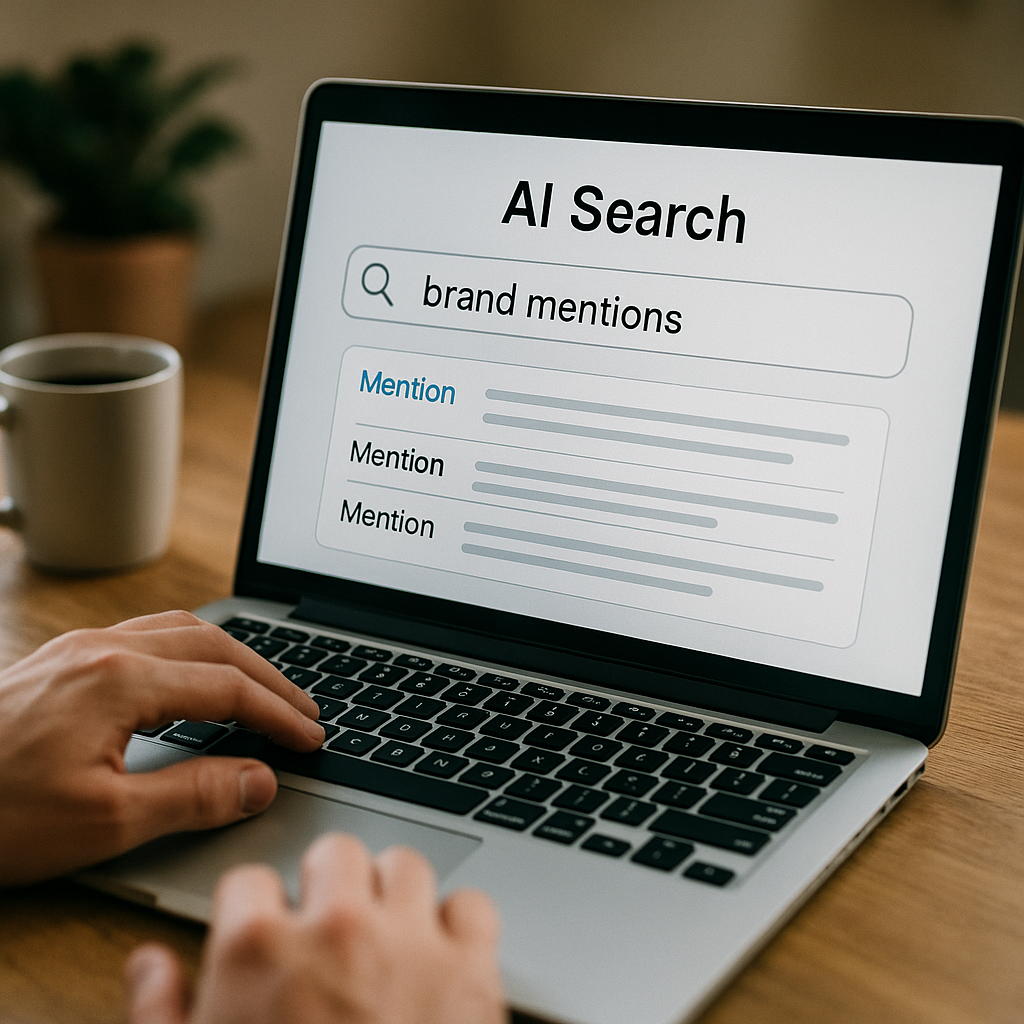
How To Track Brand Mentions In AI Search matters when patients, caregivers, and local consumers ask tools like ChatGPT, Gemini, Perplexity, or Copilot which clinic, supplement brand, telehealth service, or wellness company they should trust. This guide shows a simple, repeatable way to find AI mentions, check accuracy, protect patient safety, and improve visibility without making risky medical claims.
How To Track Brand Mentions In AI Search Without Guesswork
To track brand mentions in AI search, test real patient-style prompts across major AI answer engines, record whether your brand appears, review the surrounding medical context, check cited sources, and monitor changes weekly. For healthcare brands, accuracy matters because misleading mentions may affect patient decisions, symptoms, medications, and care expectations.
AI search does not work like traditional Google rankings. Instead of showing ten blue links, AI systems summarize information from many sources, including publisher articles, review platforms, medical directories, knowledge panels, forums, and structured web content. Therefore, your brand may appear even when your website does not rank first.
For healthcare organizations, this is especially important. A family practice, dermatology clinic, mental health platform, nutrition brand, or medical device company may be mentioned in an AI answer about symptoms, chronic conditions, side effects, insurance, or treatment options. If the answer is outdated or inaccurate, patients may arrive confused or worried.
How To Track Brand Mentions In AI Search starts with three questions:
- Does the AI tool mention your brand when users ask relevant healthcare questions?
- Does it describe your services, credentials, locations, or products correctly?
- Does it cite trustworthy sources, such as your website, medical directories, or reputable publications?
- Does the answer include unsafe or unsupported medical claims?
- Does your competitor appear more often for the same prompt?
According to research on online health behavior, many people search symptoms and treatment information before speaking with a clinician. Consequently, AI-generated summaries may shape expectations before a patient books an appointment. However, these tools can miss nuance, especially around diagnosis, contraindications, allergies, pregnancy, medication interactions, and emergency symptoms.
Why AI Brand Mentions Affect Healthcare Trust And Patient Decisions
AI visibility can support trust, but only when the information is accurate, current, and medically responsible. For example, an AI answer that correctly names your cardiology clinic as a local provider is useful. Meanwhile, an answer that implies your clinic treats chest pain without urgent evaluation could create risk.
Tracking AI search mentions helps healthcare marketers, practice owners, and compliance teams understand how their brand appears in patient-facing answers. Moreover, it can reveal gaps in website content, provider bios, local listings, reviews, and third-party references.
- Find inaccurate descriptions of your services, clinicians, hours, or locations.
- See whether AI platforms cite your website or rely on weaker third-party sources.
- Compare your visibility with local competitors and national health brands.
- Spot unsupported claims about supplements, medical devices, or treatments.
- Improve patient education content around symptoms, prevention, and care pathways.
- Protect trust by correcting misleading information before it spreads.
Experts recommend treating AI search monitoring as part of reputation management, not just SEO. In addition, healthcare teams should involve medical reviewers when AI summaries mention diagnoses, medications, lab testing, mental health, fertility, chronic disease, or nutrition. These topics fall into higher-risk YMYL territory because poor information can influence health choices.
How To Track Brand Mentions In AI Search With A Simple Weekly Workflow
The easiest way to begin is to build a prompt set that mirrors real searches. For instance, a physical therapy clinic might test questions about back pain, sports injury recovery, post-surgery rehabilitation, and insurance coverage. Similarly, a women’s health practice may test prompts about menopause symptoms, pelvic pain, contraception counseling, and preventive screenings.
Use your brand name, service category, location, and patient intent. Then repeat the same prompts in several AI search tools. How To Track Brand Mentions In AI Search works best when you use consistent prompts over time, because AI answers can change as the web, citations, and model behavior change.
Useful long-tail questions include:
- How do I monitor brand mentions in ChatGPT for my healthcare business?
- Why do AI search citations matter for healthcare brands?
- Can AI search give unsafe medical information about my clinic?
- How often should a medical practice check AI search visibility?
How To Track Brand Mentions In AI Search should include both branded and unbranded prompts. Branded prompts show whether AI understands your organization. Unbranded prompts show whether AI recommends you when people ask broader questions, such as “best urgent care near me” or “trusted acne treatment clinic in Austin.”
What To Record When Checking AI Mentions Of A Health Brand
A spreadsheet is often enough at the start. However, larger healthcare networks may use AI visibility platforms, SEO tools, rank trackers, brand monitoring software, and manual medical review. The goal is not only to count mentions. Instead, you want to judge quality, risk, and actionability.
Track these fields each time you run a test:
- Prompt used: Save the exact question, including location, condition, service, or product category.
- AI platform: Record whether the result came from ChatGPT, Gemini, Perplexity, Copilot, Google AI Overviews, or another tool.
- Mention status: Note whether your brand appears, is omitted, or is replaced by competitors.
- Position and context: Capture whether your brand is first, listed among options, or mentioned negatively.
- Medical accuracy: Review claims about symptoms, treatments, side effects, credentials, and outcomes.
- Citations: Check whether the AI references your website, directories, review sites, news articles, or clinical resources.
- Risk level: Mark low, moderate, or high risk based on possible patient misunderstanding.
- Next action: Decide whether to update content, request directory corrections, publish patient education, or escalate to compliance.
For example, if an AI answer says your clinic offers pediatric asthma care but you only treat adults, that is a high-priority correction. Likewise, if a supplement brand is described as treating diabetes, hypertension, anxiety, or autoimmune disease, that wording could be unsafe and potentially noncompliant. Studies suggest that clear, balanced health content performs better for trust because it explains limits, evidence, and when to seek care.
Risks And Precautions When AI Search Mentions Medical Brands
AI search can be helpful, but it can also produce outdated, incomplete, or overconfident answers. This matters in healthcare because people may use AI responses to decide whether to delay care, try a product, stop a medication, or self-diagnose. Therefore, medical brands should monitor mentions with patient safety in mind.
Common risks include:
- Incorrect claims about treatments, procedures, or clinical outcomes.
- Confusion between similar provider names, locations, or specialties.
- Unsupported supplement or nutrition claims related to hormones, immunity, inflammation, or metabolism.
- Missing warnings about red-flag symptoms, pregnancy, children, older adults, or medication interactions.
- Use of outdated reviews, old addresses, former clinicians, or closed locations.
AI tools are not substitutes for diagnosis or individualized medical care. If a patient has severe symptoms, medication concerns, allergic reactions, chest pain, suicidal thoughts, breathing problems, or sudden neurological symptoms, they should contact a healthcare provider or emergency service promptly. In addition, brands should avoid using AI visibility work to promote guarantees, miracle cures, or unsupported claims.
7 Practical Steps To Improve AI Search Mentions Safely
Once you know where your brand appears, improve the source material AI systems may rely on. In most cases, better entity clarity leads to better AI summaries. This means your website, profiles, schema, reviews, and expert content should all tell the same story.
- Update core pages first. Make service pages clear, specific, and medically reviewed when they discuss diagnosis, treatment, symptoms, or conditions.
- Strengthen provider bios. Include credentials, specialties, board certifications, locations, and patient care focus.
- Use consistent local data. Match your name, address, phone number, hours, and specialties across directories.
- Create patient education content. Answer common questions about conditions, prevention, testing, recovery, risks, and when to seek care.
- Add evidence and limits. Use measured language such as “may help,” “is often associated with,” and “experts recommend.”
- Monitor review platforms. AI tools may summarize reputation signals from Google Business Profile, Healthgrades, Yelp, Zocdoc, and similar sites.
- Recheck prompts monthly. For competitive or high-risk topics, review weekly until mentions stabilize.
How To Track Brand Mentions In AI Search also requires competitor review. If three nearby clinics appear for “best migraine specialist near me” and yours does not, compare their online signals. They may have stronger condition pages, clearer physician credentials, more specific reviews, or better third-party mentions. Consequently, your next step may be content improvement rather than technical SEO alone.
Finally, document corrections. If an AI system cites a directory with wrong information, fix the directory. If it cites your old blog post, update the post. If it invents a service, publish clarifying content and make your official service list easier to crawl. Over time, these improvements can support both AI search visibility and traditional organic rankings.
The practical takeaway is simple: How To Track Brand Mentions In AI Search is not just a marketing task for healthcare brands. It is a trust, accuracy, and patient-safety process. Test real prompts, record what AI tools say, verify medical claims, fix weak sources, and consult qualified healthcare professionals whenever content could influence diagnosis, treatment, medication, or urgent care decisions.