
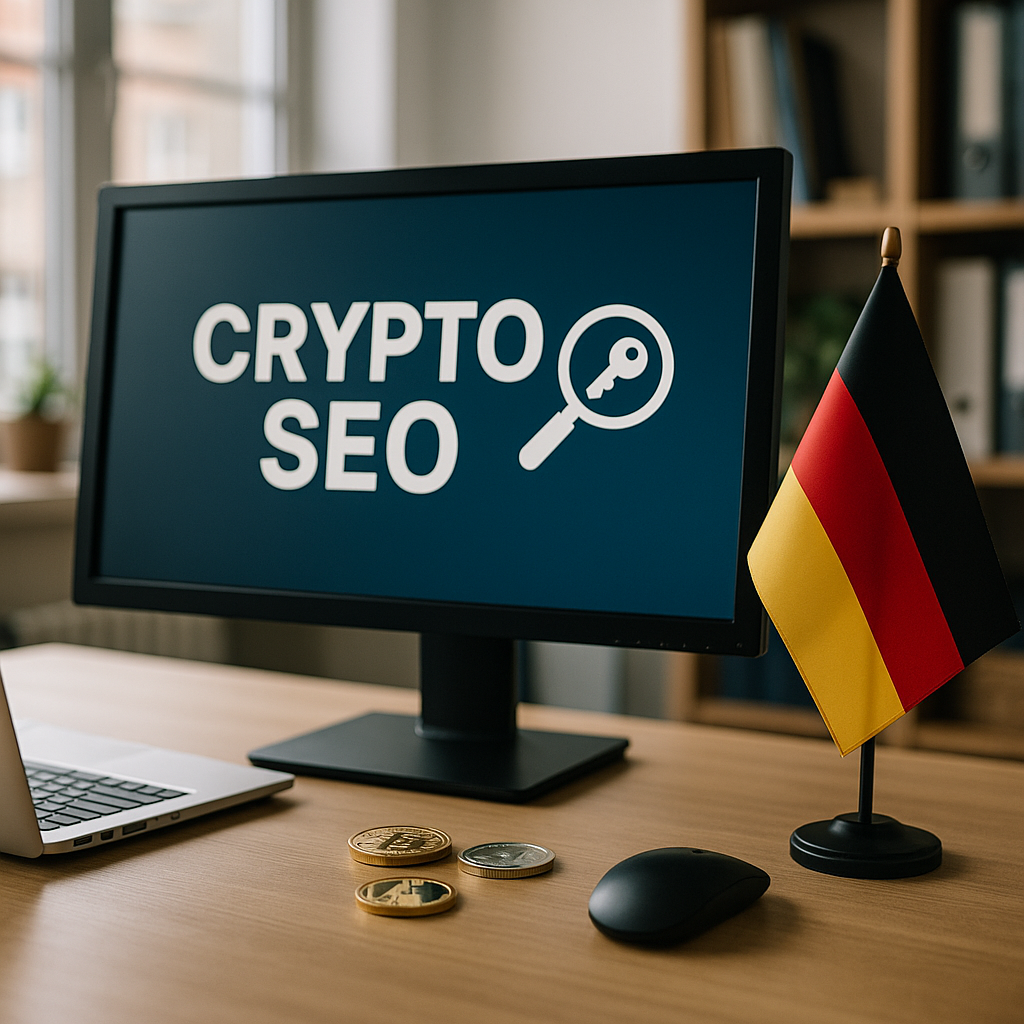
Crypto SEO For German Web3 Startups is not about publishing hype-filled token articles and hoping traders arrive. It is a disciplined growth system that helps founders earn qualified organic traffic, investor trust, developer attention, and compliant visibility in a market shaped by BaFin, MiCA, GDPR, and cautious German buyers.
Crypto SEO For German Web3 Startups: What Makes It Different?
Crypto SEO For German Web3 Startups combines technical SEO, multilingual content, regulatory awareness, trust signals, and Web3 audience research. Unlike generic SaaS SEO, it must address financial risk, protocol complexity, security concerns, and local search behavior across Germany and the wider DACH region.
German Web3 users do not search like anonymous global crypto speculators. They often compare custody models, token utility, legal status, smart contract audits, staking risk, wallet security, and business use cases before they trust a project. Therefore, your content must reduce uncertainty before it pushes conversion.
For example, a DeFi startup in Berlin may need content for founders, liquidity providers, compliance teams, and developers. Meanwhile, an NFT infrastructure company in Munich may need documentation SEO, marketplace comparison pages, and German-language guides explaining commercial licensing. In both cases, blockchain SEO must connect search intent with credibility.
In practical terms, successful Web3 SEO in Germany usually depends on four pillars: technical discoverability, topic authority, transparent risk communication, and conversion paths that respect local expectations. According to research on search behavior, users tend to trust brands more when content is specific, sourced, and easy to verify.
How Does Web3 SEO Help German Startups Scale Without Paid Ads?
Organic search can reduce dependency on volatile paid channels. Moreover, crypto advertising is restricted on many platforms, which makes SEO a more durable acquisition channel. For early-stage teams, strong content can attract developers, token holders, partners, journalists, venture funds, and enterprise leads at the same time.
- It builds topical authority around blockchain, DeFi, tokenization, custody, wallets, and smart contracts.
- It captures bottom-funnel searches such as “best crypto custody provider Germany” or “MiCA compliant token platform.”
- It supports trust through transparent pages about audits, security, leadership, and legal structure.
- It improves indexing for technical documentation, product pages, and educational hubs.
- Crypto SEO For German Web3 Startups helps turn complex protocols into searchable, understandable solutions.
However, search growth rarely comes from one viral article. It comes from building clusters. A wallet startup, for example, might create a core guide on non-custodial wallets, then supporting pages on seed phrases, hardware wallets, gas fees, account abstraction, phishing prevention, and wallet recovery risks.
Similarly, a tokenization company can publish German and English content around real-world assets, securities regulation, investor onboarding, KYC, stablecoins, and institutional custody. As a result, Google can better understand what the company does and who should see its pages.
Crypto SEO For German Web3 Startups Needs Local Search Intent, Not Generic Crypto Hype
Crypto SEO For German Web3 Startups should begin with the real questions German users type into Google. These queries often include terms like “sicher,” “seriös,” “BaFin,” “Steuern,” “Wallet,” “Krypto Verwahrung,” “MiCA,” and “Blockchain Unternehmen Deutschland.” Therefore, direct translation from English is rarely enough.
A strong keyword map should separate informational, commercial, and trust-building intent. For instance, “what is staking?” is educational, while “staking provider Germany” is commercial. Meanwhile, “is staking taxable in Germany?” is a high-trust informational query that may influence conversion later.
German startups should also consider language architecture carefully. Some projects need separate German and English pages. Others need DACH-focused landing pages for Germany, Austria, and Switzerland. In addition, hreflang tags, localized metadata, and culturally appropriate examples help avoid duplicate content problems and poor user engagement.
What Should a Crypto SEO Strategy Include in the First 90 Days?
The first 90 days should focus on foundations before aggressive publishing. If Google cannot crawl your site, understand your structure, or trust your claims, even excellent articles may underperform. Consequently, technical SEO and content planning should happen together.
- Run a technical audit covering crawlability, indexation, Core Web Vitals, JavaScript rendering, canonicals, schema, and internal links.
- Map keyword clusters around products, use cases, industries, competitors, and German regulatory concerns.
- Create trust pages for team members, legal entity details, security audits, risk explanations, and contact information.
- Publish one flagship educational hub supported by 6 to 10 specific long-tail articles.
- Track rankings, Google Search Console impressions, indexed pages, assisted conversions, and branded search growth.
Experts recommend avoiding thin glossary content as the main strategy. Glossaries can help, but they rarely create enough authority alone. Instead, combine explainers with comparison pages, developer tutorials, compliance guides, case studies, and problem-solving content.
For example, a layer-2 infrastructure startup could publish “Ethereum scaling for German fintechs,” “how rollups reduce transaction costs,” and “smart contract audit checklist for enterprise Web3 pilots.” These topics show expertise and attract users beyond speculative trading searches.
Which Pages Build the Most Trust for German Crypto Users?
Trust pages are not optional in crypto. Because users worry about scams, volatility, data privacy, and regulatory exposure, your website must answer trust questions before sales calls. This is especially important for products involving custody, token issuance, DeFi access, or institutional onboarding.
High-performing German Web3 sites often include pages for:
- Company registration, location, leadership, and investor information
- Security audits, bug bounty policies, and smart contract documentation
- BaFin, MiCA, GDPR, AML, or KYC explanations where relevant
- Transparent tokenomics, risk factors, and governance details
- Customer stories, integrations, press mentions, and partner logos
This matters because Google’s quality systems reward content that demonstrates experience and accountability. Moreover, readers make better decisions when a startup explains limitations clearly. Avoid promising guaranteed profits, risk-free staking, or certain token appreciation. These claims may damage trust and create regulatory exposure.
Instead, use measured language. A staking product may help users participate in network validation, but it can involve slashing, lock-up periods, validator downtime, tax complexity, and market volatility. A wallet may improve self-custody, but users still need to protect seed phrases and understand irreversible transactions.
What Are the Biggest SEO Risks for Web3 Companies in Germany?
The biggest risks are not only technical. They include compliance mistakes, overpromising financial outcomes, weak security messaging, duplicate translated content, poor JavaScript rendering, and content written for traders rather than real buyers. In addition, some backlinks from low-quality crypto sites can create more risk than value.
Crypto SEO For German Web3 Startups must be especially careful with YMYL-style financial content. Since crypto decisions can affect a person’s money, vague claims are dangerous. Therefore, content should explain risks, cite credible sources where possible, and encourage users to consult qualified legal, tax, or financial professionals for personal decisions.
Common mistakes include publishing anonymous articles, hiding the team, using AI-generated market predictions, buying spam links, and writing only for high-volume keywords. However, German audiences often reward specificity. A lower-volume article about “MiCA compliance for token issuers in Germany” may outperform a generic “what is crypto” post commercially.
How Can Founders Make Crypto SEO For German Web3 Startups Safer and More Effective?
Crypto SEO For German Web3 Startups becomes safer when marketing, legal, product, and technical teams work together. This does not mean every article should read like a legal memo. However, it should avoid unsupported claims and explain important user risks clearly.
- Review money-related claims before publishing, especially around yield, staking, token value, and investment outcomes.
- Add author bios or reviewer notes from credible internal experts, such as protocol engineers or compliance leads.
- Use schema markup for organization, articles, FAQs, breadcrumbs, software applications, and reviews where appropriate.
- Build internal links from educational content to product pages, demo pages, documentation, and security resources.
- Update content after regulatory changes, product releases, audits, chain upgrades, and major market events.
In addition, founders should measure more than rankings. Organic traffic is useful, but qualified demos, documentation sign-ups, wallet connections, newsletter subscribers, and partner leads reveal whether SEO supports growth. As a result, your reporting should connect search visibility with business outcomes.
How Long Does Crypto SEO Take in Germany?
Most serious Web3 startups should expect meaningful movement within three to six months, although competitive terms may take longer. Faster indexing can happen within 24 to 48 hours when a site has clean technical SEO, fresh XML sitemaps, strong internal links, and regular publishing. Still, ranking on page one usually requires sustained authority.
New domains often need patience. Meanwhile, established Web3 brands with press coverage, backlinks, documentation, and branded search demand may rank faster. Therefore, the best approach is to publish long-tail content early while building authority for harder keywords over time.
Crypto SEO For German Web3 Startups works best when it treats search as a trust-building engine, not a traffic trick. Start with technical foundations, answer German users’ real questions, explain financial and security risks honestly, and build topic clusters that match your product. With patient execution, Crypto SEO For German Web3 Startups can become a scalable acquisition channel that paid ads cannot easily replace.