
How To Track Brand Mentions In AI Search matters most when inaccurate AI answers can shape real patient decisions before someone ever reaches your website. If you manage a healthcare brand, clinic, supplement company, medtech platform, or wellness publication, this guide shows you how to measure AI visibility, protect trust, and spot risky misinformation early.
How To Track Brand Mentions In AI Search for Healthcare Visibility
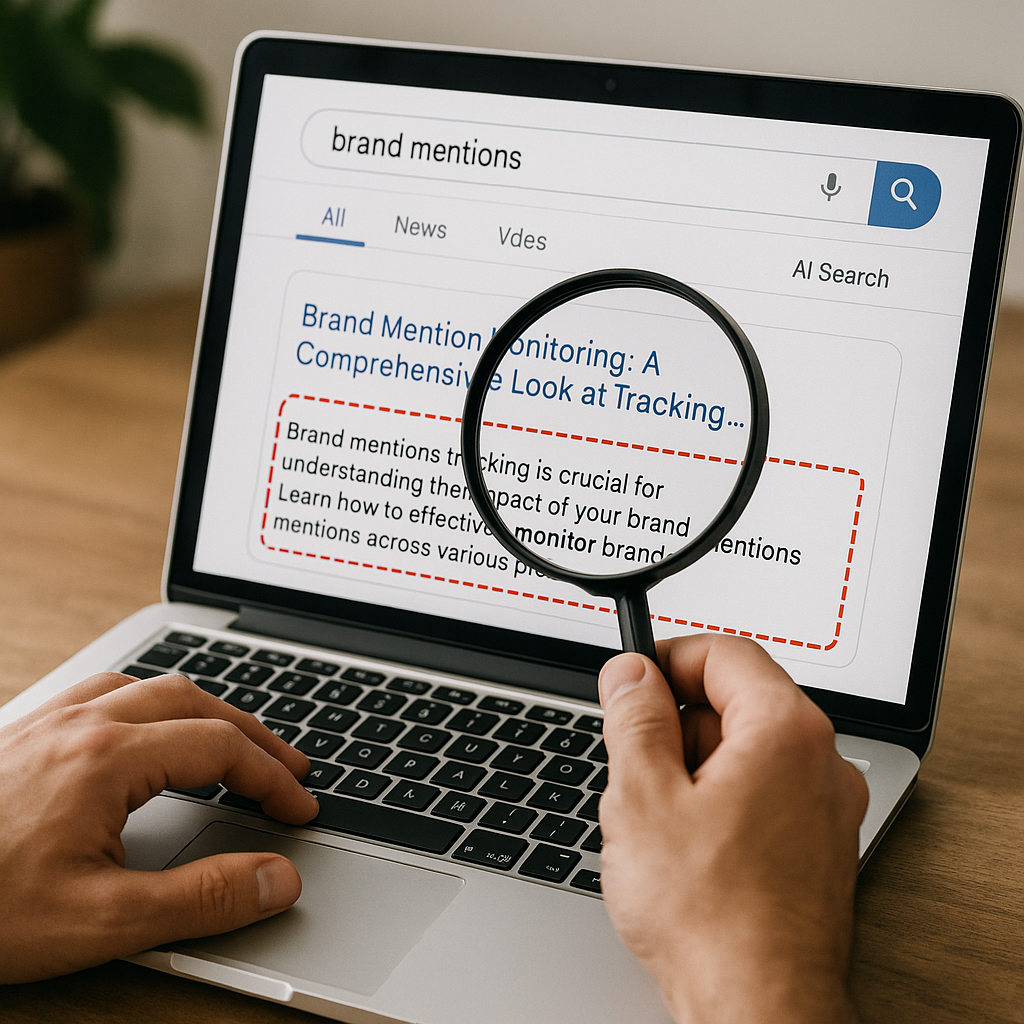
To track brand mentions in AI search, test your brand across AI answer engines, record when it appears, analyze the wording around each mention, check whether sources are cited, and monitor changes over time. For healthcare brands, also review accuracy, safety language, credentials, and whether AI answers could influence medical decisions.
AI search is different from traditional Google rankings. Instead of showing ten blue links, tools such as ChatGPT, Google AI Overviews, Perplexity, Gemini, and Copilot often summarize answers. Therefore, your brand may influence a patient, caregiver, journalist, or practitioner even when they never click your site.
This is especially important in health because users often ask sensitive questions about symptoms, diagnosis, adverse effects, supplements, prescription medications, nutrition, fertility, chronic disease, and mental health. According to research on online health behavior, many people use search results to prepare for healthcare conversations. However, AI-generated summaries can miss context, overstate claims, or blend credible and weak sources.
For that reason, brand monitoring in AI search should measure more than visibility. It should also measure accuracy, sentiment, source quality, and patient safety risk.
Why AI Brand Monitoring Matters More for Health Brands
AI mentions can influence reputation, referrals, product demand, and trust. Moreover, they can affect how people understand health information. A cardiology clinic, for example, may want to know whether AI tools mention its physicians for local heart care. Meanwhile, a nutrition brand should know whether AI describes its product with unsupported claims.
Strong AI visibility tracking can help you identify:
- Brand presence: whether your company, clinicians, products, or publications appear in AI responses.
- Context: whether the mention is positive, neutral, negative, outdated, or medically misleading.
- Citations: whether AI tools cite your site, third-party reviews, clinical guidelines, or low-quality sources.
- Competitive gaps: which competitors appear for questions where your brand has stronger expertise.
- Safety concerns: whether answers include diagnosis, contraindications, adverse effects, or “consult a healthcare provider” language where appropriate.
In addition, AI citation tracking can reveal content weaknesses. If your health article explains a condition well but lacks author credentials, publication dates, references, or clear safety guidance, AI systems may favor a competitor with stronger E-E-A-T signals.
How To Track Brand Mentions In AI Search With a Repeatable Workflow
The best process is structured, repeatable, and realistic. One random prompt will not show your true AI visibility. Instead, create a test set that reflects how real users search. For example, a dermatology practice might test “best acne specialist near me,” “rosacea treatment options,” “is laser treatment safe for darker skin,” and “dermatologist with experience treating eczema.”
Use this workflow to build a reliable AI search monitoring system:
- Define your brand entities. Include company names, clinician names, product names, service lines, medical specialties, locations, and common misspellings.
- Build question clusters. Group prompts by condition, symptom, treatment, local intent, comparison intent, and patient concern.
- Test multiple AI platforms. Run the same prompts in ChatGPT, Gemini, Perplexity, Copilot, and Google AI Overviews when available.
- Record the response exactly. Save the date, prompt, platform, brand mention, citation, sentiment, and any medical accuracy concerns.
- Score quality and risk. Rate whether the answer is accurate, current, balanced, and safe for health-related readers.
- Repeat monthly. AI systems change often, so trends matter more than a single snapshot.
How To Track Brand Mentions In AI Search: combine manual prompt testing with AI visibility tools, then review each healthcare mention for accuracy, citations, sentiment, and safety language.
Several tools can support this process. LLM brand monitoring platforms, rank tracking software with AI modules, media monitoring tools, and answer engine optimization dashboards can help. However, human review remains essential for healthcare content because automated sentiment scores may miss clinical nuance.
What Should You Measure Beyond Simple Brand Mentions?
A brand mention alone does not tell the whole story. In health, the surrounding language can matter more than the appearance itself. For instance, a menopause clinic may appear in an AI answer, but if the response incorrectly describes hormone therapy risks, the mention could create confusion.
Track these practical AI search metrics:
- Mention frequency: how often your brand appears across target prompts.
- Share of AI answer: how often your brand appears compared with competitors.
- Citation source: whether the AI cites your website, PubMed, medical associations, review platforms, or media articles.
- Accuracy score: whether the answer aligns with current medical consensus and clinical guidelines.
- Trust signals: whether the response mentions credentials, board certification, medical reviewers, or evidence-based care.
- Conversion intent: whether the prompt suggests someone is ready to book, compare, buy, or seek care.
Similarly, track what is missing. If AI answers mention your competitor for “best physical therapy clinic for back pain” but not your clinic, investigate why. Your website may need stronger service pages, expert bios, patient education content, reviews, local schema, or clearer explanations of conditions and treatments.
Many teams also ask, “How do I know if ChatGPT mentions my brand?” The simplest answer is to create a prompt library, run it consistently, and log every response. However, for larger healthcare organizations, it is better to combine manual checks with software that monitors LLM outputs at scale.
Risks and Precautions When Tracking Health Mentions in AI Answers
AI search monitoring can protect your brand, but it also has limits. AI systems may personalize outputs, update silently, or produce different answers to the same question. Therefore, you should avoid treating any single AI response as a fixed ranking result.
Healthcare brands should also watch for YMYL-specific risks. These include unsupported treatment claims, unsafe supplement statements, missing adverse effect warnings, outdated clinical information, and language that appears to diagnose a user. If an AI tool implies that your product can treat a disease without evidence, document it and correct your owned content immediately. In some cases, legal, regulatory, or compliance review may be needed.
Do not use AI visibility data to replace medical advice, clinical governance, or patient safety processes. If content involves symptoms, medication changes, contraindications, pregnancy, chronic disease, mental health, or urgent care, experts recommend clear guidance to consult a healthcare provider. For emergencies, users should seek urgent medical care rather than rely on AI answers.
Practical Tips to Improve AI Search Mentions Safely
Once you understand where and how AI tools mention your brand, improve the evidence signals that AI systems can interpret. This often overlaps with strong SEO, but it goes further because generative systems look for clarity, consistency, and trusted entities.
- Strengthen expert attribution. Add clinician authors, medical reviewers, credentials, review dates, and editorial policies to health content.
- Answer real patient questions clearly. Use headings that match natural questions, such as “Can AI search affect patient trust?” and “Which tools track AI brand mentions?”
- Use medically careful language. Say “may help,” “is often associated with,” and “studies suggest” when evidence is not absolute.
- Build entity consistency. Keep names, services, addresses, clinician specialties, and product descriptions consistent across your website, Google Business Profile, directories, and trusted publications.
- Earn credible citations. Publish original research, expert commentary, patient education, and medically reviewed resources that trusted sites may reference.
- Correct risky content gaps. Add side effects, contraindications, who should avoid a treatment, and when to seek professional care.
In addition, create pages that directly answer long-tail questions. Examples include “Which AI tools mention my healthcare brand?”, “How can clinics monitor AI search visibility?”, and “Why is my competitor showing up in AI answers?” These pages can support answer engine optimization while helping users get clearer information.
Notably, Google and AI platforms reward content that demonstrates real expertise. For healthcare businesses, this means practical experience, original insights, transparent sourcing, and careful medical framing. As a result, content written only for keywords is less likely to become a trusted AI source.
How Often Should Healthcare Brands Check AI Search Mentions?
Most healthcare brands should check priority AI prompts at least monthly. However, high-risk categories may need more frequent reviews. These include mental health, fertility, oncology, weight loss, pediatrics, supplements, medical devices, telehealth, and prescription-related content.
For example, a supplement company should monitor whether AI answers connect its product with unapproved disease treatment claims. Meanwhile, a hospital system should track local service-line queries, physician reputation, emergency care information, and condition-specific prompts. Consequently, the right cadence depends on risk, search demand, and business impact.
A simple reporting dashboard can include prompt category, AI platform, brand mentioned, competitors mentioned, citation URL, sentiment, medical accuracy, risk level, and recommended action. Over time, this creates a useful record of your AI visibility and reputation trends.
The Practical Takeaway for AI Brand Visibility in Health
AI search is becoming a reputation layer between your healthcare brand and the people who need trustworthy information. Therefore, tracking mentions is no longer optional for clinics, health publishers, wellness companies, medtech firms, and patient-focused organizations. Start with your highest-value questions, review each answer for accuracy and safety, then improve the content signals AI systems use to understand your authority. The smartest way to protect trust is to monitor consistently, respond carefully, and keep patient safety central when learning How To Track Brand Mentions In AI Search.