

I’ll be honest: I hadn’t heard of Consensus until recently, but the concept hooked me — an AI search engine that only answers from peer-reviewed papers. For this consensus ai review 2026, I dug into the official docs, the live pricing page, and what researchers are actually saying, so you get a well-researched picture instead of marketing hype. Quick note on framing: this is a research-based review, not hands-on testing — I’ll tell you what’s reported (per the official site, per reviews) rather than claiming I ran the experiments myself.
Short version: it’s one of the cleanest ways I’ve seen to get cited answers from science fast. The Consensus Meter is its signature trick, the free tier is genuinely usable, and the 2026 pricing (which I verified on the official site) starts at $20/month for Pro. But there are real limitations — no mobile app, and AI summaries that demand double-checking. Let’s get into it.
Quick Answer: Consensus AI is an AI search engine for peer-reviewed research — ask plain-language questions and get answers with citations from ~200M indexed papers. Its signature Consensus Meter shows how studies agree or disagree on a claim. The free tier includes unlimited paper searches; Pro starts at ~$20/month (verified below). It’s best for students, researchers, and anyone who needs cited, evidence-based answers fast.
What Does It Actually Do?
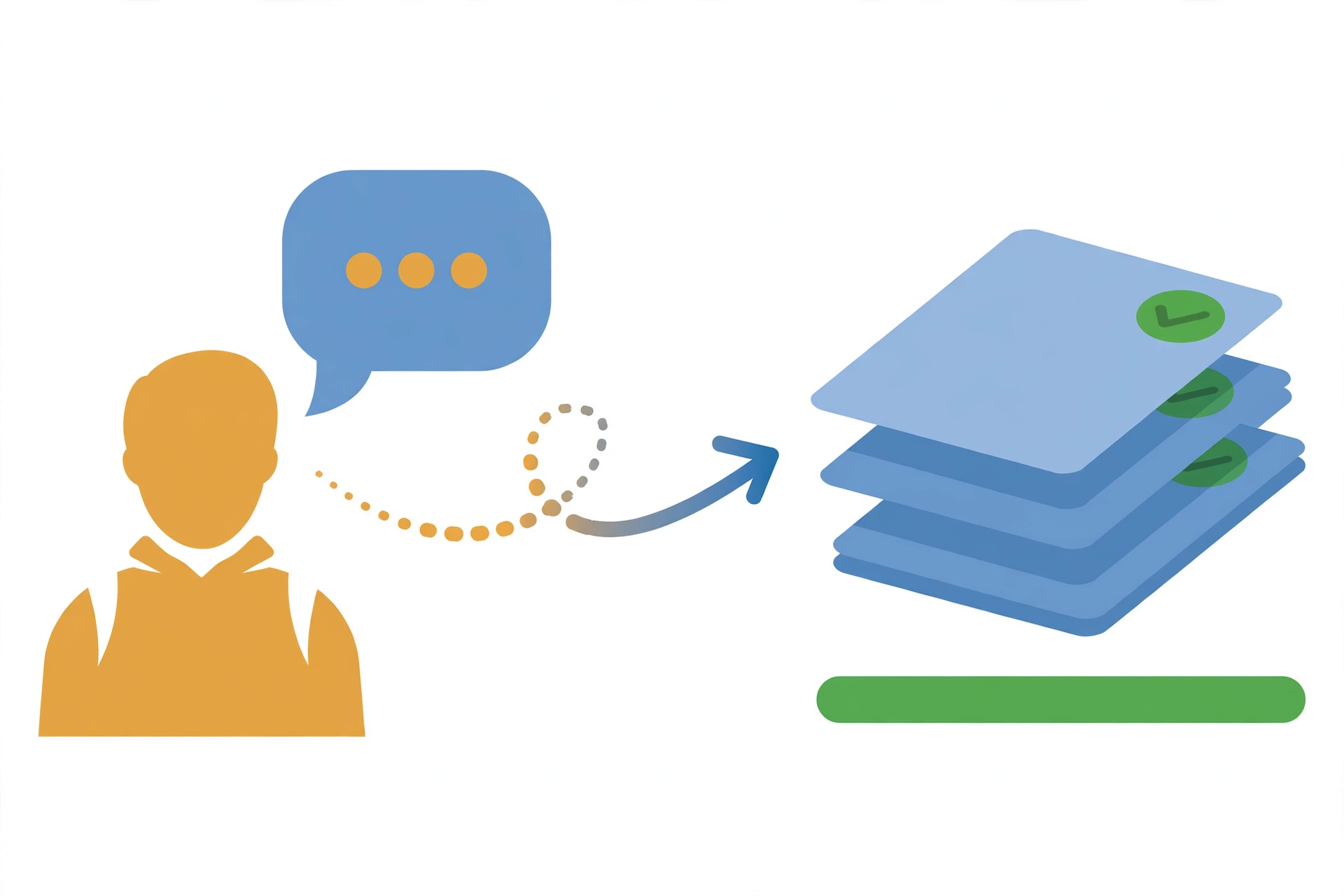
Most AI chatbots will happily answer “does intermittent fasting work?” with a confident-sounding paragraph and zero sources. Consensus flips that: you ask a plain-language research question, and its AI searches only peer-reviewed literature — roughly 200 million papers indexed — then returns evidence with citations, not generic web answers.
Each result paper comes with AI-extracted findings, so you can skim what the study actually found without opening every PDF. Think of it less as a chatbot and more as a research assistant that did your first literature pass for you.
Who’s it for? Based on everything I read: grad students doing lit reviews, researchers sanity-checking claims, clinicians and journalists who need evidence fast, and frankly anyone tired of “trust me bro” AI answers. It runs in the web app, works as a ChatGPT app, and offers API/MCP access for teams that want to plug it into their own tools.
Key Features
Consensus Meter
This is the signature feature, and honestly the one I’d try first. Ask a yes/no-style question — “does creatine improve strength?” — and you get a visual gauge showing what share of relevant studies answer Yes, No, or Possibly. Reviews say it’s brilliant for getting a fast read on where the evidence leans, though it can’t replace reading the actual papers when the details matter.
AI-Extracted Findings
Every result paper shows a one-sentence key finding pulled by AI, plus a study-type badge — RCT, meta-analysis, systematic review, and so on — along with the journal and citation count. That combination (finding + study design + citation count) is a genuinely good triage system: you can spot the rigorous, well-cited work at a glance.
Study Snapshots
Quick evidence-weight panels give you at-a-glance context like sample size, so you can judge how much weight a study deserves. A “Yes” from a 20-person pilot and a “Yes” from a 2,000-person RCT are very different things, and Snapshots help you tell them apart fast.
Deep Review
For bigger questions, there’s a multi-step AI literature-review mode that synthesizes across many papers into a deeper report. It’s limited on the free plan (3 per month) and much more generous on paid tiers (15/month on Pro, 200/month on Deep) — which, per the official site, makes it the main reason to upgrade if you’re doing serious lit-review work.
Filters and Synthesize
You can narrow results by journal, publication year, subject field, and study design/methodology — essential when a broad query returns hundreds of papers. Then the Synthesize button generates a cited, plain-language summary across your top results, which researchers report is the fastest way to go from “pile of papers” to “understandable answer.”
Works Everywhere (and Exports Citations)
Consensus isn’t locked to one surface: there’s the web app, a ChatGPT app, and API/MCP access for developers and teams. Citations are exportable for papers and reports, so the evidence you find can flow straight into your bibliography.
If your workflow is more about questioning a single document you already have — the ask PDFs anything use case — that’s a different job than Consensus’s literature-wide search, and worth knowing before you pick a tool.
Pricing
I verified these figures on the official Consensus pricing page in October 2026 — annual billing cuts prices by 40%:
- Free — $0: 10 Pro messages/month, 3 Deep Reviews/month, and dynamic AI-powered search and analysis. Genuinely usable for occasional research questions.
- Pro — $20/month or $144/year ($12/month billed annually, save $96): unlimited Pro messages, 15 Deep Reviews/month, unlimited research tools, 500 API & MCP uses/month. The sweet spot for grad students and regular researchers.
- Deep — $65/month or $540/year ($45/month billed annually, save $240): everything in Pro, 200 Deep Reviews/month, 2,000 API & MCP uses/month. Built for power users and small labs doing heavy synthesis.
- Teams — custom pricing: team administration, shared billing, and 50 Deep Reviews per user. Contact Consensus for a quote.
Discounts: students, faculty, and clinicians get up to 40% off with a valid school email or NPI — which brings Pro down to roughly $12/month on monthly billing (even less on annual).
Honest take: $20/month is real money on a student budget — the 40% academic discount genuinely helps there. The free tier is more generous than most AI tools’ free plans, but the Deep Review quota (3/month) feels tight by design; if literature synthesis is your whole workflow, expect to pay. Annual billing saves a full 40%, so only pay monthly while you’re testing. My advice: start free, and upgrade to Pro only when you keep hitting the message or Deep Review limits.
Consensus AI
Get research-backed answers with real citations — in seconds.
Free plan available
Consensus AI vs Elicit vs SciSpace
Consensus isn’t the only AI research tool, and the right pick depends on your job. Here’s how the three compare, based on what each is built for:
| Consensus AI | Elicit | SciSpace | |
|---|---|---|---|
| Best for | Fast cited answers to research questions | Systematic evidence extraction and building structured extraction tables | Reading and questioning individual PDFs — paper-level analysis |
| Price | Free–$65/month, up to 40% academic discount | Free tier with paid plans available | Free tier with paid plans available |
| Key strengths | Consensus Meter, AI-extracted findings, Study Snapshots, Deep Review | Structured evidence extraction, systematic-review workflows | PDF chat, deep single-paper Q&A |
| Learning curve | Easy | Moderate | Easy |
Rule of thumb from my research: pick Consensus when you need a cited answer to a question fast, Elicit when you’re building structured evidence tables for a systematic review, and SciSpace when you’re deep-reading individual papers. (And if you mostly interrogate single PDFs, my ask PDFs anything pick is Humata.)
Pros and Cons
What I like:
- The Consensus Meter is genuinely clever — a fast visual read on where the evidence leans.
- Every answer is tied to real citations from peer-reviewed papers, not generic web text.
- The free tier is actually usable, not a glorified trial.
- AI-extracted findings + study-type badges make triaging papers fast.
- Citations are exportable, and the ChatGPT app / API / MCP access is a nice bonus.
What I don’t like:
- No mobile app — it’s web-only as of 2026.
- AI summaries can miss nuance; verify critical claims against the original papers.
- Deep Review quotas feel tight on the free plan (3/month).
- Pro at $20/month is real money for students (the 40% academic discount helps).
- ~200M papers indexed is impressive, but it’s still not all of science.
How to Get Started
- Create a free account at consensus.app — the free tier needs no card and is enough to test properly.
- Ask a real research question in plain language, e.g. “does intermittent fasting improve metabolic health?”
- Read the Consensus Meter first to see where the evidence leans (Yes / No / Possibly).
- Skim the AI-extracted findings and check the study-type badges — weight RCTs and meta-analyses over small pilots.
- Use filters and Synthesize to narrow by year, journal, or methodology, then generate a cited summary of your top results.
- Export the citations into your reference manager or report.
- Upgrade only if you hit limits — Pro’s unlimited messages and 15 Deep Reviews/month are the natural next step, especially at the 40% academic discount.
Once your research is gathered, the next stage is writing it up — for drafting research papers with real citations, Jenni AI is the tool I reviewed for that job.
FAQs
Is Consensus AI free?
Yes — the free tier costs $0 and includes AI-powered search and analysis, 10 Pro messages/month, and 3 Deep Reviews/month. Paid plans start at $20/month (Pro), with annual billing bringing it down to $12/month.
How accurate is Consensus AI?
It only searches peer-reviewed literature (~200M papers), so answers are grounded in real studies rather than generic web text. That said, AI summaries can miss nuance — per the official guidance and researcher reports, always verify critical claims against the original papers.
What is the Consensus Meter?
It’s Consensus’s signature feature: a visual gauge showing what share of relevant studies answer Yes, No, or Possibly to your research question — a quick read on where the scientific evidence leans.
Can I use Consensus AI for a literature review?
Yes — Deep Review is a multi-step AI literature-review mode built exactly for that. You get 3 Deep Reviews/month free, 15/month on Pro, and 200/month on Deep, plus filters by journal, year, field, and study design.
Is there a Consensus AI mobile app?
No — as of 2026, Consensus is web-only. You can use it in the browser, as a ChatGPT app, or via API/MCP, but there’s no native iOS or Android app.
Final Verdict: Consensus AI Review 2026
So, is it worth it? For students, researchers, clinicians, and journalists who regularly need cited, evidence-based answers, I’d say yes — the free tier alone is worth trying, and Pro at $20/month (or ~$12 with the academic discount) is fair for what you get if literature search is part of your weekly workflow. The Consensus Meter and AI-extracted findings are genuinely useful, not gimmicks.
Who should skip it? If you mostly interrogate single PDFs you already have, a paper-level tool like SciSpace or Humata fits better; if you need structured extraction tables for systematic reviews, Elicit is the stronger pick. And if you’re a casual user with one question a month, the free tier is all you’ll ever need.
Bottom line: Consensus does one job — turning research questions into cited answers — and does it well. Try the free plan at https://consensus.app and see if it earns a spot in your workflow.